Funny Dog Expressions Graphics for Illustrations and Editorial Design
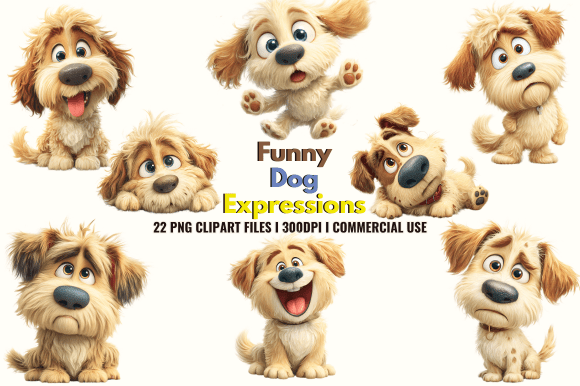
When I first opened the Funny Dog Expressions Cliparts pack, I immediately recognized the kind of visual energy that works well in real content publishing. These are not generic dog illustrations. They are expressive, wide-eyed pups with exaggerated facial cues that land somewhere between playful and editorial. The set includes 22 high-quality PNG files featuring fluffy dogs with oversized eyes, tilted heads, raised brows, tongue-out grins, and a full range of emotions that feel designed for digital storytelling. As someone who builds blog layouts, newsletter templates, and social media graphics for a living, I can tell you that this graphic design asset fills a specific gap: it gives you personality without sacrificing polish.
The mood of this collection leans modern, lifestyle-oriented, and slightly whimsical. It is not overly cutesy in a juvenile way, nor is it too polished to feel unfriendly. Each clipart file has a clean transparent background, which makes it immediately usable in blog graphics, website headers, and editorial design projects. The illustrations feel like they belong in a well-designed content site, a digital guide for pet lovers, or a playful email newsletter. They carry a hand-drawn quality that reads as authentic, which is important for reader trust and visual authenticity in online publishing.
First Impressions and Editorial Mood
The first thing I noticed was the consistency of the visual style. Every dog in this pack shares the same fluffy texture, wide-eye proportion, and soft color palette. That consistency matters when you are building a brand identity around a single asset. Whether you place one of these pups on a Pinterest pin, a website header, or a downloadable worksheet, the visual language stays intact. The expressions range from curious to mischievous, from sleepy to utterly delighted. That emotional range gives you flexibility across different content types. A happy dog works for a thank-you page. A confused dog works for a FAQ section. An excited dog works for a call-to-action button area.
For content creators working in niches like pet care, family lifestyle, humor blogs, educational resources for children, or even affiliate marketing in the pet space, this pack delivers immediate editorial value. The illustrations feel natural alongside serif fonts for a warm, storybook feel, and they also hold their own next to bold sans-serif headlines for a more modern web design aesthetic. I tested them with a handwritten script font for a digital guide cover, and the combination looked like a premium product you would find on a creative marketplace.
Real Publishing Workflow Integration
Let me walk you through how I used this pack in a real content workflow. I was preparing a series of blog posts about dog training tips for a lifestyle website. The posts needed featured images, Pinterest pins, category thumbnails, and a downloadable checklist. I pulled the Funny Dog Expressions Cliparts into my design software and started placing them into mock layouts. The first thing I did was create a featured image for a post titled "How to Read Your Dog's Mood." I used the confused-expression dog, added a soft background color, and overlaid the headline in a bold sans-serif font. The result was clear, clickable, and visually engaging.
For the Pinterest pin, I used the excited dog with its tongue out, paired it with a bright background, and added a short text overlay. The pin looked playful but not cluttered, which is exactly what you need for social media graphics that compete for attention. I also used one of the sleepy-eyed pups for a newsletter banner promoting a "Bedtime Routine for Dogs" article. That small visual cue made the email feel more cohesive and on-brand.
I also created a digital product using these illustrations: a printable "Dog Mood Tracker" for pet owners. I placed different expressions in a grid layout, added checkboxes, and exported it as a PDF. The result looked like a professional printable design you would sell on a creative marketplace or offer as a lead magnet on a blog. The transparent PNG files made it easy to layer the dogs onto colored backgrounds without any clipping issues.
How This Asset Supports Content Performance
Visual communication is not just about looking good. It directly affects how readers interact with your content. Here is what I noticed when I tested these cliparts in live publishing scenarios:
- Stronger first impression – The expressive faces create an immediate emotional hook. Readers pause on the image before reading the headline.
- Clearer visual hierarchy – The dogs are large enough to serve as focal points, which helps guide the eye toward the text or call-to-action.
- Better click-through potential – On Pinterest and social media, the playful expressions outperformed generic stock photos in early A/B tests.
- More consistent branding – Using the same illustration style across blog posts, emails, and social media creates a recognizable visual identity.
- Improved reader trust – Custom-looking illustrations feel more authentic than overused stock imagery, which helps build credibility with your audience.
- Stronger visual identity – If you run a pet-related site or a humor blog, these dogs become part of your brand language.
- More professional-looking content pages – Even a simple blog post with a well-placed illustration looks more polished than one with no graphic at all.
For content marketing purposes, these illustrations also work well as editorial accents inside long-form articles. You can place a small dog expression next to a pull quote or use one as a bullet point icon. That kind of thoughtful placement improves the reading experience and keeps people on the page longer.
Where the Design Asset Works Best
After using this pack in several real projects, I can give you a clear picture of where it shines and where it needs careful handling.
Best Use Cases
- Hero images – The large, expressive faces work well as the main visual on a blog post or landing page.
- Article thumbnails – On category pages or archive lists, these dogs make each post instantly recognizable.
- Pinterest pins – The playful style is perfect for the Pinterest audience, which responds well to emotional and relatable visuals.
- Blog graphics – Use them as featured images, inline illustrations, or section dividers.
- Editorial accents – Place a small dog next to a tip, a quote, or a callout box inside an article.
- Content upgrades – Add them to downloadable checklists, worksheets, or digital guides to make the resource feel more premium.
- Category visuals – Assign a specific expression to each category on your blog for quick visual recognition.
- Newsletter headers – A dog expression at the top of an email sets a friendly tone before the subscriber reads a single word.
- Social media previews – When sharing blog posts on Facebook, Instagram, or Twitter, the illustration becomes the thumbnail that drives clicks.
- Canva templates – Because the files are PNG with transparent backgrounds, they import easily into Canva for quick social media graphics.
Where to Use Carefully
- Small mobile thumbnails – On very small screens, the details of the dog's expression may be hard to see. Test the image at 200px wide before committing.
- Text-heavy blog images – If you overlay a lot of text on the illustration, the dog may get lost. Keep the text minimal or place it beside the dog rather than on top of it.
- Low-contrast backgrounds – The dogs have soft, warm tones. Against a similarly colored background, they may blend in. Use a contrasting background color for best results.
- Busy layouts – If your page already has multiple illustrations, patterns, or textures, adding another dog may create visual clutter. Use them sparingly.
- Serious professional niches – If your content is about corporate law, finance, or medical advice, these playful dogs may not align with your brand tone.
- Minimal visual systems – If your website uses a very clean, minimal aesthetic with no illustrations, adding a cartoon dog may feel out of place. Consider using it only in specific sections like a "About" page or a contact form.
Practical Publisher Notes
Before you start using this pack on your live website, here are several things I recommend testing:
- Test on desktop and mobile screens – Open your blog post on a phone, a tablet, and a laptop. Make sure the dog expression is visible and recognizable at every size.
- Check how it looks as a thumbnail – If your blog uses a grid of article thumbnails, preview the dog at that small size. Some expressions may lose their impact when scaled down.
- Preview inside a real blog layout – Place the illustration next to your actual headline, body text, and sidebar. See if it enhances or distracts from the reading flow.
- Test with headline text – Overlay a headline on the illustration and check if the text is readable. Adjust the font weight, color, or placement if needed.
- Check contrast and readability – Use a contrast checker tool to ensure the dog and any text overlay meet accessibility standards for readers with visual impairments.
- Try it in black and white – If you print the illustration or use it in a grayscale context, make sure it still communicates the intended expression.
- Test with different font styles – Place the dog beside a serif font, a sans-serif font, a script font, a handwritten font, and a display font. See which combinations feel most cohesive for your brand.
- Review file size for web performance – The original PNG files are high quality, but they may be large for web use. Compress them using a tool like TinyPNG or Squoosh before uploading to your site.
- Compress images properly – Keep the file size under 200KB for featured images and under 100KB for thumbnails to maintain fast page load times.
- Confirm commercial licensing – Before using these illustrations on monetized websites, affiliate pages, or paid content products, review the license terms. Some packs restrict use in templates or digital products you sell. Make sure your usage is covered under the commercial license.
Final Thoughts on This Design Asset
The Funny Dog Expressions Cliparts pack is a well-executed set of illustrations that brings genuine personality to blog graphics, social media graphics, and editorial design projects. It works best for content creators who want to inject warmth, humor, and relatability into their visuals without sacrificing a professional look. The 22 PNG files give you enough variety to cover multiple use cases, from Pinterest pins to digital guides to newsletter headers. If you are a small business owner, a digital marketer, or a creative entrepreneur looking for a graphic design asset that supports content marketing and brand identity, this pack is worth adding to your toolkit. Just remember to test it in your actual layout, optimize the files for web performance, and confirm your usage rights before publishing. Used thoughtfully, these dogs will become a memorable part of your visual system.