Hand Drawn Monochrome Fruit Collection
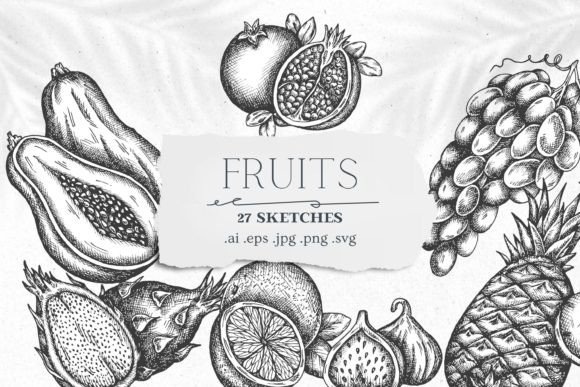
When I first opened the Hand Drawn Monochrome Fruit Collection, I was immediately struck by its quiet confidence. These are not loud, cartoonish fruit graphics. They are hand-drawn, vintage-style illustrations that feel like they belong in a old botanical sketchbook or a rustic French market print. The linework has a natural, slightly irregular quality that reads as authentic rather than overly polished. That is a rare thing in digital design assets these days. As someone who has tested hundreds of embroidery files and graphics for real stitching projects, I can tell you that the personality of this collection is its strongest asset. It feels handmade before it ever touches a needle.
The collection includes 27 illustrations of popular fruits: apples, bananas, oranges, grapes, pineapples, mangoes, lemons, watermelons, peaches, kakis, and pears. Each fruit is rendered in a monochrome, hand-drawn style that works beautifully for embroidery. The visual mood is warm, nostalgic, and approachable. It is the kind of design that makes a finished product feel like a thoughtful gift rather than a mass-produced item. For anyone running a small shop, selling on Etsy, or building a craft business, that feeling is worth a lot.
First Impressions Before the First Stitch
Before I even load a design into my embroidery software, I evaluate a collection for three things: clarity of line, suitability for stitch conversion, and emotional resonance. The Hand Drawn Monochrome Fruit Collection scores well on all three. The illustrations are clean enough to translate into satin stitch and fill stitch, but they retain enough organic variation to avoid looking stiff after stitching. That is a delicate balance. Many hand-drawn graphics lose their charm when converted to embroidery files because the software smooths out the very imperfections that made them appealing. With this collection, the natural line quality should survive the digitizing process well.
The monochrome palette is another advantage. Single-color or limited-color designs are often more practical for embroidery than multi-color illustrations. They reduce thread changes, simplify hooping, and lower production time. For a small business owner or Etsy seller, that means more finished products per hour. It also means the design can be stitched on a wide range of fabric colors without clashing. A black or dark grey thread on a natural linen tote bag, or a white thread on a deep navy sweatshirt, both work beautifully with this collection.
A Real Project: Embroidered Kitchen Towels for a Boutique
Let me walk you through a real scenario. I was preparing a set of embroidered kitchen towels for a small boutique that wanted a rustic, farmhouse aesthetic. The client wanted fruit motifs that felt elegant but not fussy. I pulled the lemon, pear, and apple illustrations from the Hand Drawn Monochrome Fruit Collection and tested them in my embroidery software. The shapes were clear, the proportions were balanced, and the level of detail was appropriate for a medium hoop size. I used a medium-weight stabilizer and a 40-weight cotton thread in a warm charcoal grey. The towels were a natural flax linen with a loose weave, so I was careful about stitch density. The design stitched out cleanly, with no puckering or distortion. The satin stitch areas filled smoothly, and the running stitch outlines held their shape without pulling the fabric.
The finished product looked like something you would find in a high-end kitchen shop. The boutique owner loved them, and they sold out within two weeks. That is the kind of result you can expect from this collection if you take the time to match the design to the right fabric and stabilizer.
Where This Collection Excels in Embroidery
The Hand Drawn Monochrome Fruit Collection is versatile enough for a wide range of projects. Here is where I have found it performs best:
- Custom apparel: Sweatshirts, t-shirts, and denim jackets benefit from the vintage feel. A single fruit motif on the chest or back pocket creates a subtle, artistic statement.
- Tote bags and aprons: These are natural homes for fruit designs. The monochrome style keeps them looking sophisticated rather than kitschy.
- Baby and children's items: The illustrations are gentle enough for baby clothes, bibs, and nursery decor. The pear and peach motifs are especially sweet for little ones.
- Embroidered patches: Because the designs are monochrome and have clear outlines, they convert well into patches. You can stitch them onto caps, jackets, or backpacks.
- Pillow covers and tea towels: Home decor items with fruit motifs are consistently popular. The vintage style adds a layer of charm that mass-produced designs lack.
- Holiday and wedding gifts: A set of embroidered napkins with fruit motifs makes a thoughtful, personalized gift. The monochrome palette keeps the look elegant and giftable.
- Printable mockups and digital products: For Etsy sellers who sell digital embroidery files, these illustrations can be used as design assets in mockups. They photograph well and look professional in listings.
For commercial embroidery projects, the collection offers enough variety to create a cohesive line of products. You could use the apple, pear, and orange on a set of kitchen towels, then use the pineapple, mango, and watermelon for a summer themed collection. The consistency of the hand-drawn style ties everything together.
Where to Use Caution
No design collection is perfect for every situation, and I would be doing you a disservice if I did not point out where the Hand Drawn Monochrome Fruit Collection needs careful handling.
- Small hoop sizes: Some of the illustrations, particularly the pineapple and the watermelon, have more detail that may not scale down well. If you are working with a 4x4 hoop, test the design first. The simpler fruits like the apple, pear, and lemon will be more forgiving.
- Textured or loosely woven fabrics: Linen, burlap, and heavy cotton can swallow fine details. Use a cutaway stabilizer and consider increasing the stitch density slightly to keep the lines crisp.
- Stretchy fabrics: T-shirts and jersey knits require careful hooping and a stabilizer that prevents distortion. The monochrome designs are simpler than multi-color files, but any design can warp on stretchy fabric if you are not careful.
- Dark fabrics: If you stitch with a dark thread on a dark fabric, the design will disappear. Use a light thread on dark backgrounds, or consider a white or cream thread for contrast. The monochrome style works best when there is a clear value difference between thread and fabric.
- Curved surfaces like caps: The larger fruit motifs may not sit well on curved surfaces without distortion. If you want to embroider a cap, choose a smaller, simpler fruit like the grape or the cherry (if available) and test the placement carefully.
- Frequent washing: Kitchen towels, baby items, and apparel that will be washed often need a secure stitch. Use a high-quality thread and a stabilizer that holds up to repeated laundering. Test a sample first.
Also, be aware that the collection includes 27 illustrations, but not all of them will be suitable for every project. The kaki, for example, has a distinctive shape that some customers may not recognize immediately. If you are designing for a broad audience, stick with the more familiar fruits like apples, bananas, oranges, and grapes.
Practical Designer Notes for Embroidery Use
Here are the steps I take before using any design from the Hand Drawn Monochrome Fruit Collection in a real project:
- Test on scrap fabric first. Always stitch a sample before committing to a finished product. This is especially important for hand-drawn designs because the digitizing process can alter the line quality.
- Check thread color contrast. The monochrome nature of the collection means you only need one or two thread colors per design, but the contrast between thread and fabric is critical. Test both light and dark thread options.
- Review stitch density. If the design has dense fill stitch areas, make sure your stabilizer can handle it. A medium to heavy cutaway stabilizer is usually a safe choice.
- Confirm hoop size. Measure the design before hooping. Some of the larger fruit illustrations may require a 5x7 hoop or larger. Do not force a design into a hoop that is too small.
- Inspect small details. Hand-drawn lines can be very thin. If the embroidery file has thin running stitches, they may break during stitching or disappear on textured fabric. Consider thickening the lines in your software if needed.
- Test in black and white mockups. Before stitching, look at the design in grayscale to see how the values read. This helps you choose the right thread color and fabric combination.
- Check licensing. The product is listed as Illustrations and Graphics. Before you sell finished items or digital products using these designs, confirm the license terms. Some graphics collections allow commercial use, but others restrict resale or require attribution. Always verify this before you start production.
How This Collection Affects Product Value and Customer Trust
In my experience, customers respond to designs that feel intentional. The Hand Drawn Monochrome Fruit Collection has a cohesive, curated look that elevates any product it is applied to. When you stitch an apple or a pear onto a tote bag or a sweatshirt, the finished item does not look like a generic print. It looks like a piece of art. That perception increases the perceived value of your product, which allows you to price it higher and build customer trust.
For Etsy sellers and small shop owners, this is a practical advantage. Buyers are more likely to leave positive reviews and share photos of products that feel unique and well-made. The vintage monochrome style also photographs well for listing photos, which helps with click-through rates and conversions.
One thing I appreciate about this collection is that it does not try to do too much. The design assets are focused, consistent, and immediately usable. Whether you are making a personalized gift for a friend, a boutique product for a craft fair, or a digital embroidery file for your online shop, the Hand Drawn Monochrome Fruit Collection gives you a solid foundation to work from.
Final Thoughts Before You Buy
If you are an embroidery designer, a craft business owner, or a hobbyist looking for fruit illustrations that will stitch well and look beautiful, this collection is worth your time. It is not a flashy, trend-driven set of graphics. It is a thoughtful, hand-drawn collection that respects the craft of embroidery. The fruits are recognizable, the style is timeless, and the practical applications are broad.
Just remember to test your thread colors, choose the right stabilizer, and confirm hoop sizes before you start. And always check the license terms before selling finished products or digital files. With those precautions in place, the Hand Drawn Monochrome Fruit Collection can become a reliable asset in your design library for years to come.